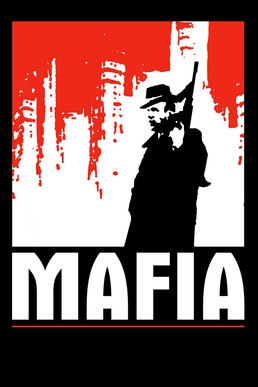
I have been playing the game Mafia, after it's recent appearance on a ludicrously cheap Steam sale. Mafia is a game I owned in the past, and remember playing it quite a bit. After the steam sale, which I also picked up Mafia II and all of it's DLC, I decided to play the original, before attempting the apply named sequel.
Mafia was released in 2002 by Gathering of Developers. Gathering was a 1998 initiative to allow developers control over their IPs (Intellectual Properties), while maintaining a relationship with a publisher. A precursor to the current Indie movement. It was developed by the Czech company, Illusion Softworks. Mafia is one of those games that tried to do a lot, and accomplished quite a bit, but was sadly overshadowed by grander AAA titles, most notably Grand Theft Auto III, which was the revolution in the GTA series.
 |
| The Falconer based loosely on the 1930 Studebaker Dictator |
Mafia takes place in the fictional city of Lost Heaven during the 1930's. The cars are period specific and are fictional (like GTA) but mimic real world counterparts. You may not instantly recognize them, but you can see that they are real life models. Unlike GTA, however, Mafia uses a much more realistic physics engine, making it more like a simulation than the Arcade like GTA. The physics, performance, and damage models are much more realistic. This is where the age old question of: Do you sacrifice realism for game-play? Imagine chugging up the Gulianno Bridge in your 1920's era auto barely reaching 20mph. It makes for a long drive and it can be a bit frustrating. And you better keep the speed limit around town or you will get the attention of the police (there is even a key that keeps your car under 40). And the police in New Heaven are true professionals, and quickly coordinate their pursuits. It also doesn't help that your car barely cracks 40mph. Also, the realistic damage models that are present in Mafia quickly erodes your cars already lackluster-yet-accurate performance. After only a few collisions, or 1 head on collision, you will find your car out of action. This can be frustrating on courier missions, where your mission will end unsuccessfully if your car is out of action.
Where Mafia truly shines, is in its storytelling. Mafia tells a tight, though slightly cliched, mob story. Every part of the game effectively enhances the story being told. The setting of Lost Heaven in the mid-1930's is perfect. The areas range from grimy low rent districts to the neo-classical shine of the down town buildings. The buzz of the cars on the streets and the pedestrians idly strolling buy make this a living breathing city. The music also greatly enhances Mafia. Period specific music is played during the driving sequences and cut scenes. The music in the game includes ragtime, jazz, and blues. And expertly done. I found myself be-bopping once our twice to the wonderful ragtime while driving around Lost Heaven. The voice acting is top notch and uses a number of actors from the HBO Series The Sapronos. The dialogue is spot on, and the action sequences are satisfying. The graphics, are still respectable by today's standards
All in all, this is a wonderful game, which has its hiccups, but tells an excellent story worthy of Martin Scorsese or Marlon Brando.

No comments:
Post a Comment